For many years, design from the Polish People's Republic era – Polish mid-century (PRL-era) furniture – was associated only with grey, cramped flats in prefabricated concrete blocks and a lack of choice. As soon as mass-produced modern particleboard furniture appeared on the market, people got rid of their old wall units, armchairs and chests of drawers without a second thought.
Time, however, has proved those decisions wrong. Today, after several decades of enthusiasm for cheap, uniform products, we are seeing a huge turn back towards the past. Timeless forms from the 1950s, 1960s and 1970s have become synonymous with luxury, good taste and unique craftsmanship. Wondering why furniture from those years is once again so desirable and how to bring these special accents into a modern living room? Find out why it is worth inviting them into your home.
The Polish Mid-Century Furniture Phenomenon – Why Is It Back in Fashion?
The return to classic design is not just a passing fad but a deeper social trend linked to a shift in our values. In a world dominated by mass-produced, short-lived goods, we are increasingly looking for objects with a unique character, a history and a soul of their own. Polish mid-century furniture meets this need perfectly. It stands out for its distinctive form, functionality and durability. It was designed at a time when material shortages meant every centimetre of space had to be used efficiently, which resulted in clever, compact solutions.
The second reason is build quality. Designs of the time were based on natural materials. Chair frames, table legs and the structural parts of chests of drawers were made of solid beech or oak. Carcasses were finished with fine natural veneers with a rich grain pattern. Today, when cheap MDF starts to deteriorate after just a few years of use, we appreciate furniture that can last for decades and still look superb. By choosing genuine soulful vintage Polish mid-century furniture, we are investing in craftsmanship that stands the test of time.
Icons of Polish Design from the 1950s and 1960s
Polish design in the middle of the last century was of an exceptionally high standard, drawing on the best principles of functionalism and the Bauhaus school. Many designs created at that time are now regarded as true design icons. The best example is the model 366 armchair designed by Jozef Chierowski in 1962. Its light wooden frame and characteristic tapered legs made it the most popular lounge chair in Poland.
Another icon is the type 387 chair, commonly known as the "Halas chair" (after its designer, Rajmund Teofil Halas), with a unique upholstered back in an organic shape. Also worth mentioning are long, low sideboards and geometric display cabinets with glass shelves. It was these remarkable furniture designs from the 1950s and 60s that shaped today's view of mid-century modern style, inspiring contemporary cabinetmakers and designers to create furniture with light, elegant forms.
How to Work Polish Mid-Century Retro Furniture into a Modern Interior
When furnishing your living room, you don't need to turn it into a faithful reconstruction of a 1960s flat. The most interesting and sophisticated results come from eclecticism – setting individual pieces from the past against a completely modern, minimalist backdrop. Raw walls (for example finished in decorative concrete or red brick), a light floor and simple modern lighting let the beauty of the old pieces shine.
How do you do it in practice?
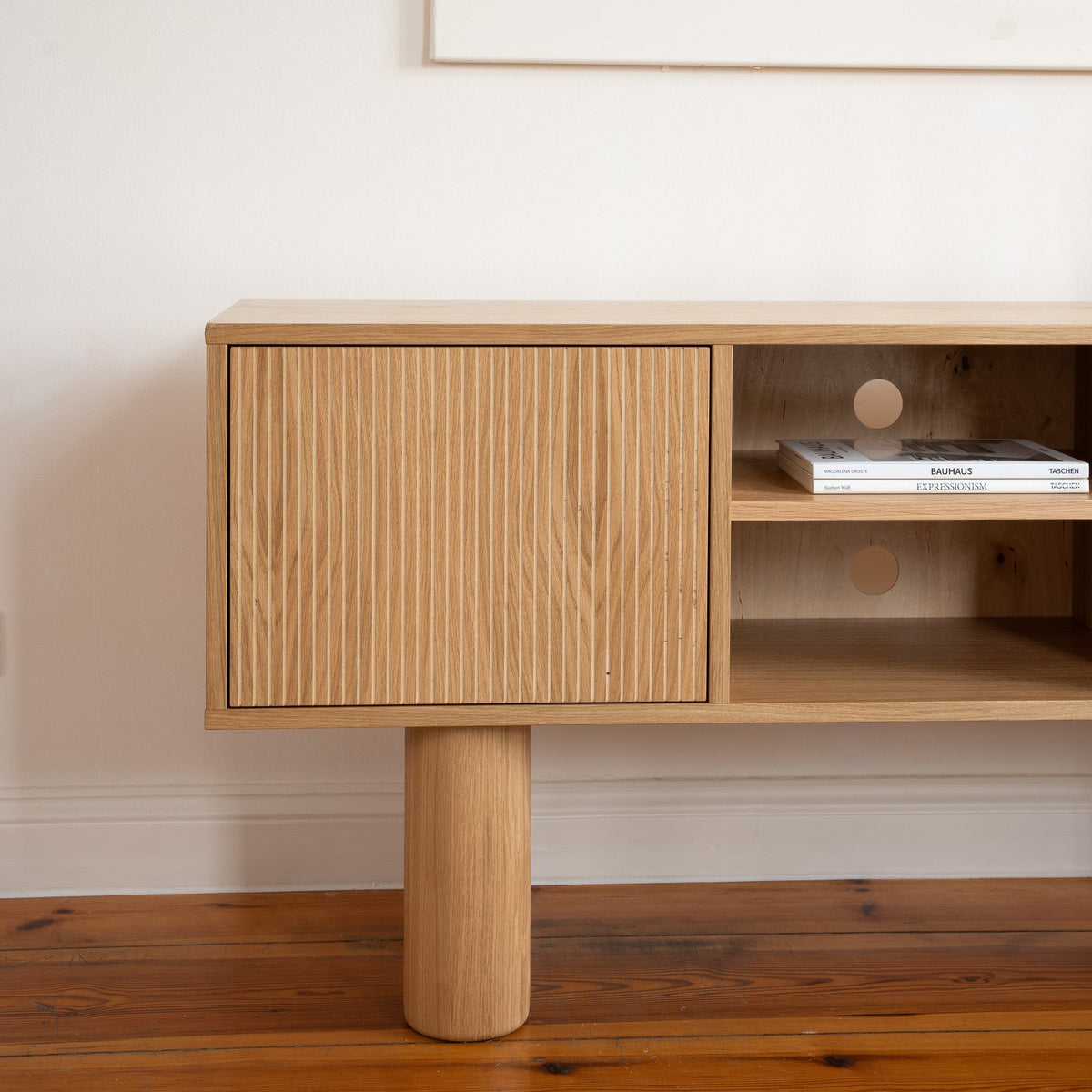
- One strong focal point: Place a long natural wood sideboard in the living room. It will serve as a TV unit and, at the same time, become the room's main decorative feature.
- Seating area: Pair a modern, minimalist sofa with two restored iconic Chierowski armchairs. Add a low coffee table on tapered legs.
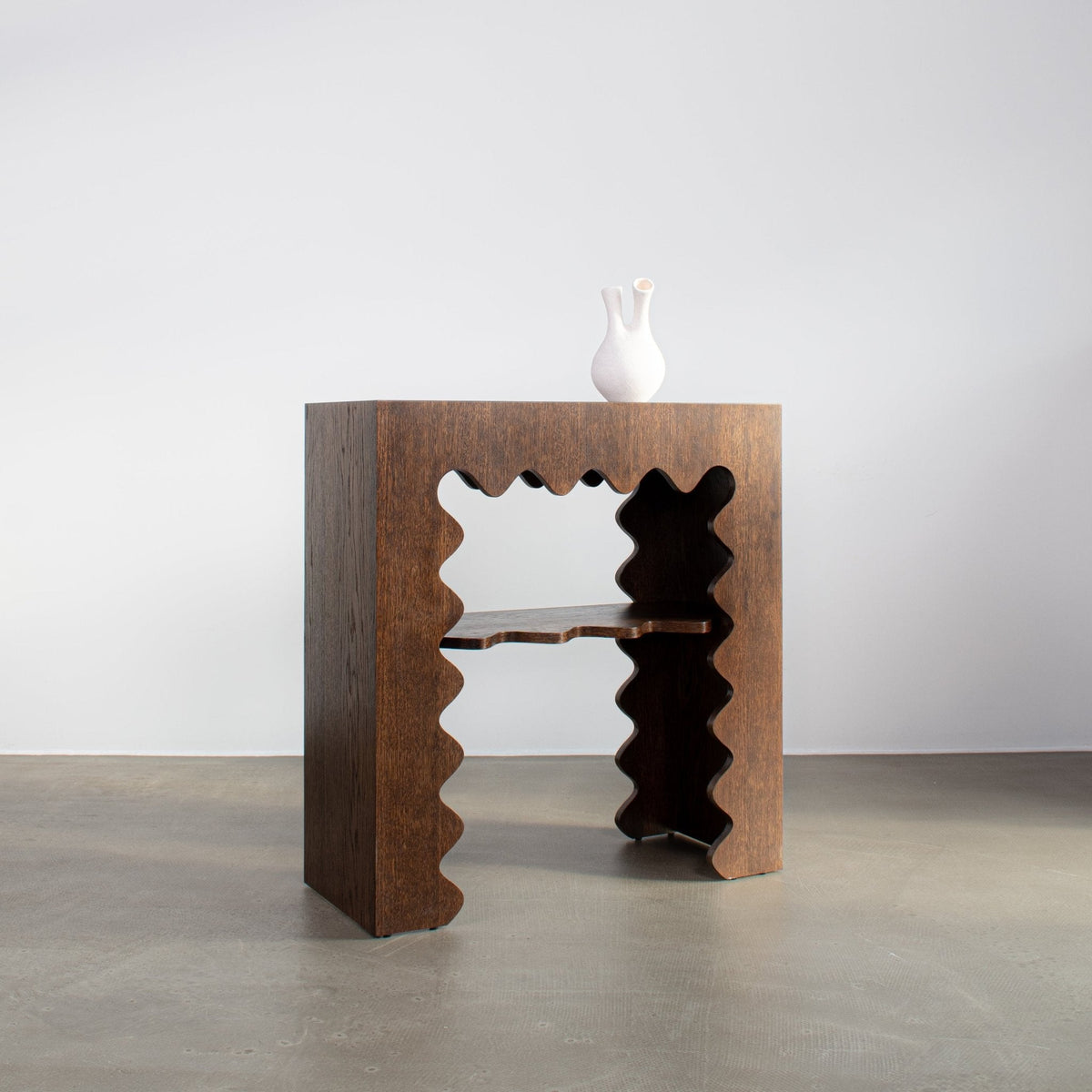
- Contrasts: Combine simple geometric bookcases with pieces that have rounded, flowing edges.
This way, furniture from the past will not overwhelm the interior but will give it unique character and warmth, breaking the sterile monotony of modern catalogues.
A Contemporary Alternative – Handcrafted Furniture Inspired by the Classics
Finding original 1960s furniture in good condition can be difficult, and professional restoration requires know-how, specialist tools and time. For those who dream of a vintage aesthetic but value perfect condition and precise workmanship, contemporary handcrafted furniture inspired by that period is an excellent solution.
Today's furniture workshops take the best from classic designs – slender legs, sliding fronts, organic forms – and combine them with modern technology and the highest-quality materials. Using fine woods such as oak and American walnut, together with natural waxes and oils, makes these pieces look truly luxurious and smell of the forest. They have the charm of bygone years while being fully functional and adapted to today's needs (for example with soft-close systems or cable outlets for TV equipment).


FAQ