Mid-century modern style has been enjoying a genuine renaissance for several years now. Contemporary interiors increasingly draw on the aesthetics of the 1950s and 1960s, combining simple forms with functionality and timeless design. Modern mid-century interior design is not a passing fad but a direction that has become a permanent part of the interior design world. Distinctive lines, natural materials and attention to detail mean that furniture from that era still impresses with its lightness and elegance.
What is modern mid-century interior design?
Modern mid-century interior design is a style that originated in the middle of the 20th century and focuses on functionality, simplicity and organic forms. It emerged in response to the need for furniture that was beautiful yet also affordable and practical. People and their everyday needs were placed at the centre of the design process.
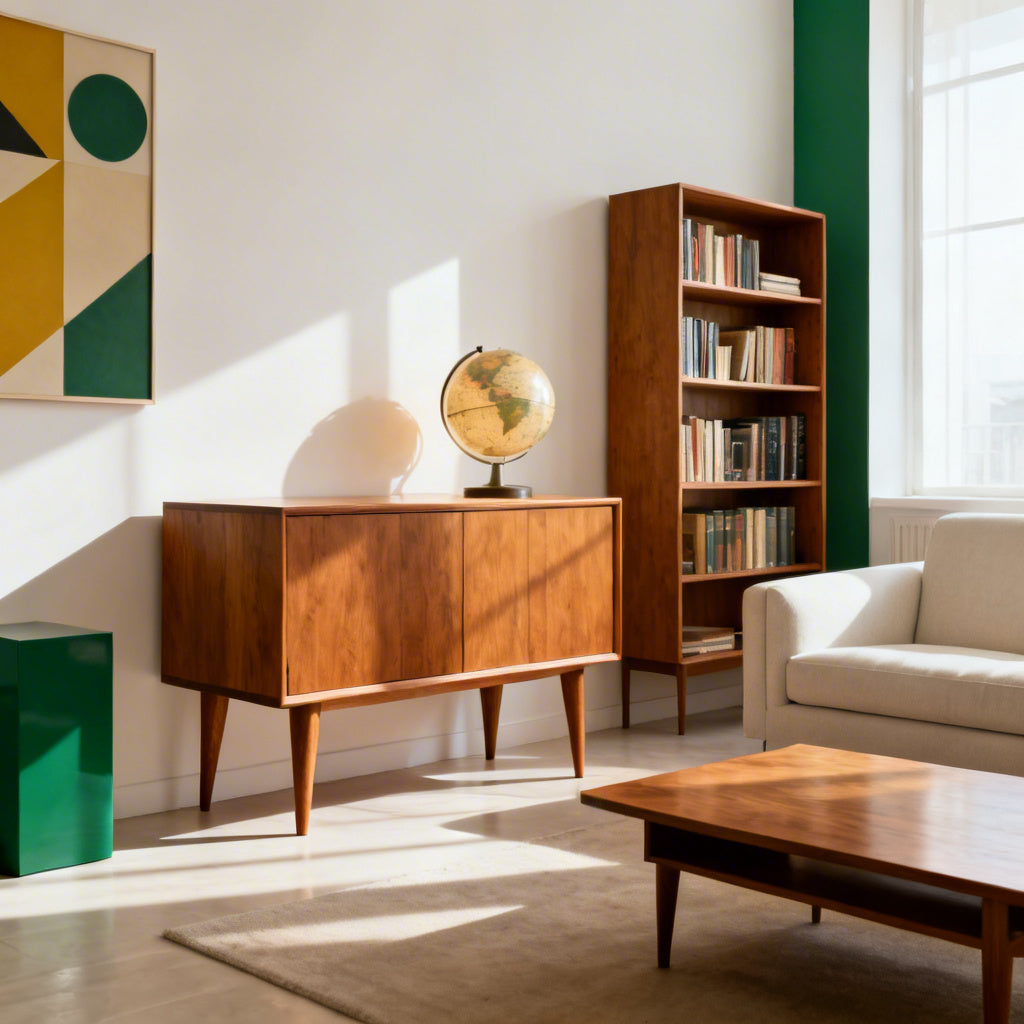
Interiors in this style are bright, orderly and full of light. They are dominated by natural materials, especially wood, and a muted colour palette punctuated by accents of mustard, green or navy. Another hallmark is slim, tapered furniture legs, which give pieces a sense of visual lightness.
It is a style that combines function and form perfectly. 1960s furniture was designed to last for years while delighting with its proportions and detailing.


1960s furniture – why is it still relevant today?
1960s furniture stands out for its timeless aesthetic and solid craftsmanship. Its strength lies in simplicity – the absence of unnecessary ornament means it fits perfectly into today's modern spaces as well. This is design that does not age, because it is built on harmonious proportions and quality materials.
Solid wood, natural veneers and geometric shapes keep furniture from that period looking fresh and elegant. Sideboards, bookcases and tables inspired by the 1960s feel right at home in open-plan living rooms and minimalist interiors.
Contemporary interpretations of the style preserve its spirit while adapting dimensions and functions to today's needs. That is why modern mid-century interior design remains so relevant.
Which furniture best captures the mid-century spirit?
In mid-century style, sideboards, credenzas, tables and armchairs with soft, flowing lines are particularly important. These are the pieces that define the character of an interior inspired by the 1950s and 1960s. Typical features include simple, geometric bodies set on slim, tapered legs, which give the furniture a sense of visual lightness. The natural texture of the wood also plays a key role – a pronounced grain, warm shades of walnut, oak or teak and a carefully finished surface.
Mid-century sideboards and credenzas are distinguished by a rhythmic arrangement of fronts and subtle details – routed handles, thin trims or contrasting inlays. Their form is restrained, but the proportions are perfectly balanced. Tables, meanwhile, often feature tops with gently rounded edges and legs that taper towards the floor, giving them an elegant, dynamic look.
The most recognisable elements include:
- sideboards with geometric fronts and natural veneer
- tables with tapered legs and slim tabletops
- bookcases with a light, modular structure, often open
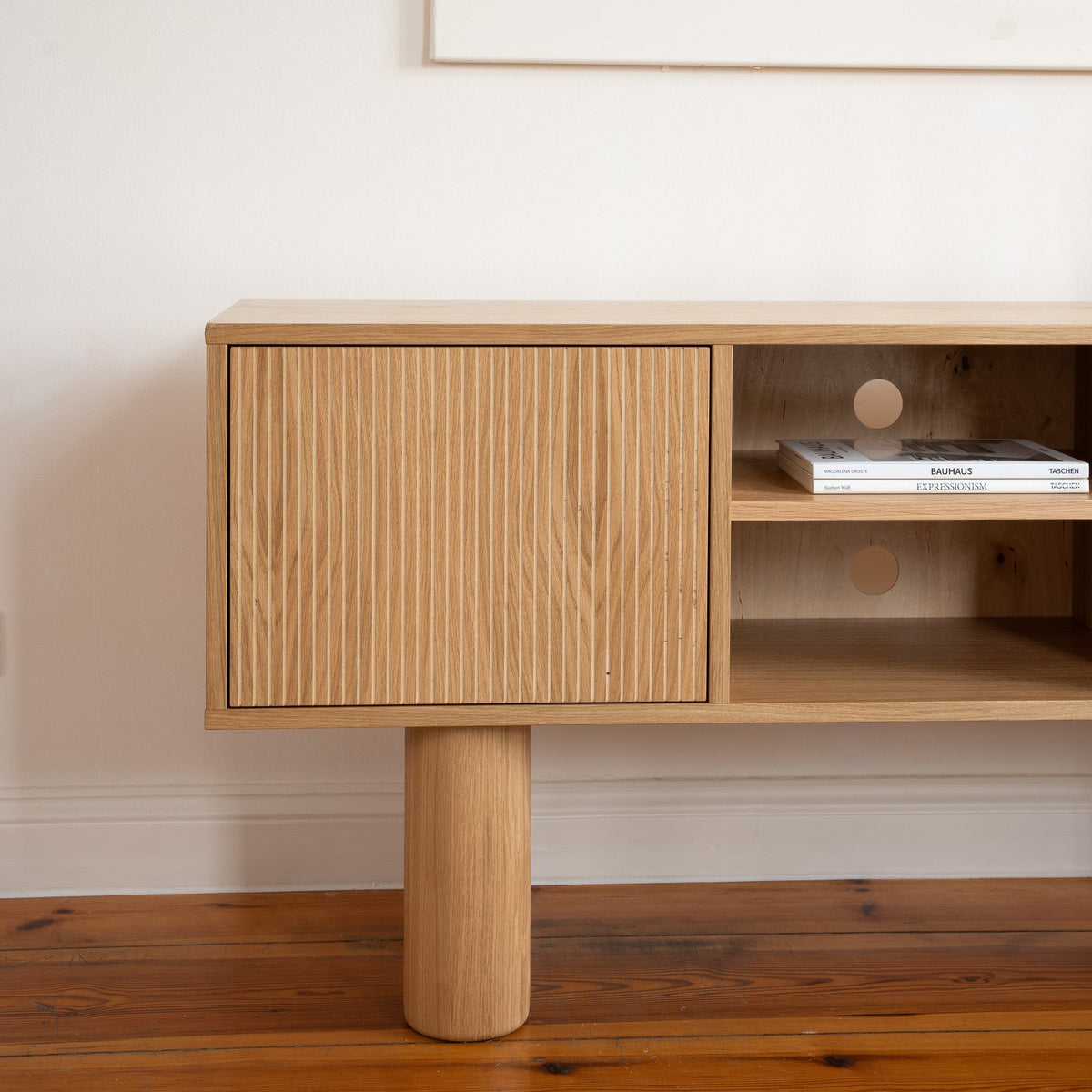
- low TV sideboards with an elongated, horizontal form
- armchairs with organic shapes and upholstered seats
All these elements share one thing – minimalism in the service of function. 1960s furniture was designed with everyday use, ergonomics and durability in mind. The form was meant to be attractive, but never excessive. That is why modern mid-century interior design still feels fresh and relevant today, and furniture inspired by that era sits perfectly in contemporary interiors.
How to bring modern mid-century interior design into a contemporary home
Introducing mid-century style into a modern flat does not require a complete makeover. A single strong accent is enough – a sideboard, table or bookcase inspired by the 1960s that becomes the focal point of the room.
It is worth pairing natural wood with neutral wall colours and simple accessories. The style works well with light floors, textiles with geometric patterns and metal details.
Modern mid-century interior design is also about playing with light – large windows, light curtains and lamps with simple, globe-shaped shades bring out the character of the furniture beautifully. The result is an interior that is elegant yet cosy.
A style that never fades – why mid-century still captivates
Modern mid-century interior design is more than inspiration drawn from a bygone era. It is a conscious choice of an aesthetic based on durability, quality and harmonious proportions. 1960s furniture still impresses with its well-thought-out construction, natural materials and timeless lines. Its visual lightness means that even more substantial pieces do not overwhelm a space, giving interiors an elegant yet welcoming character.
The style meets today's needs perfectly – it combines function with aesthetics, and minimalism with the warmth of wood. It is the answer for people who value authenticity and design rooted in quality rather than passing trends. By introducing elements inspired by the 1950s and 1960s into your home, you create a space that is coherent, elegant and resistant to changing fashions.