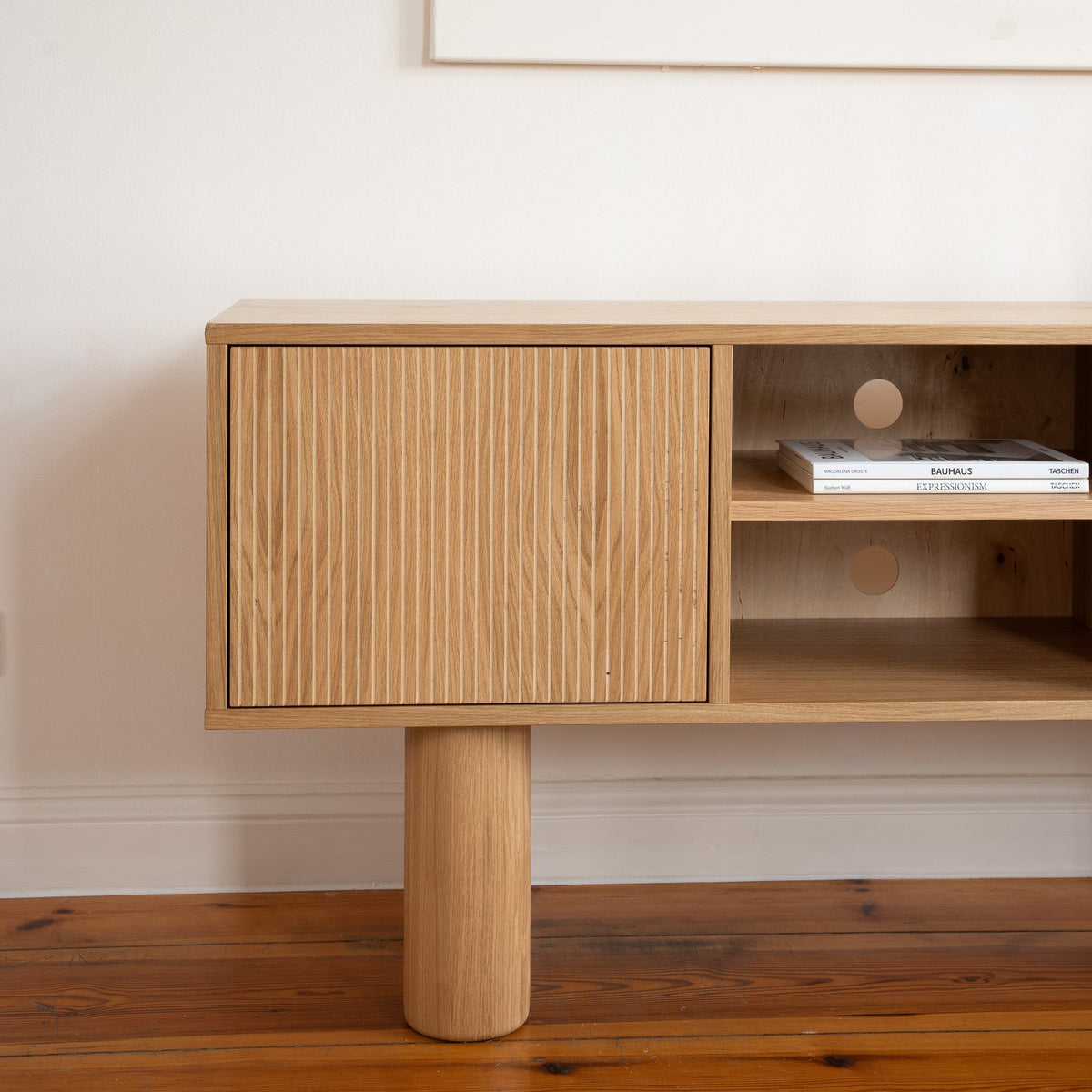
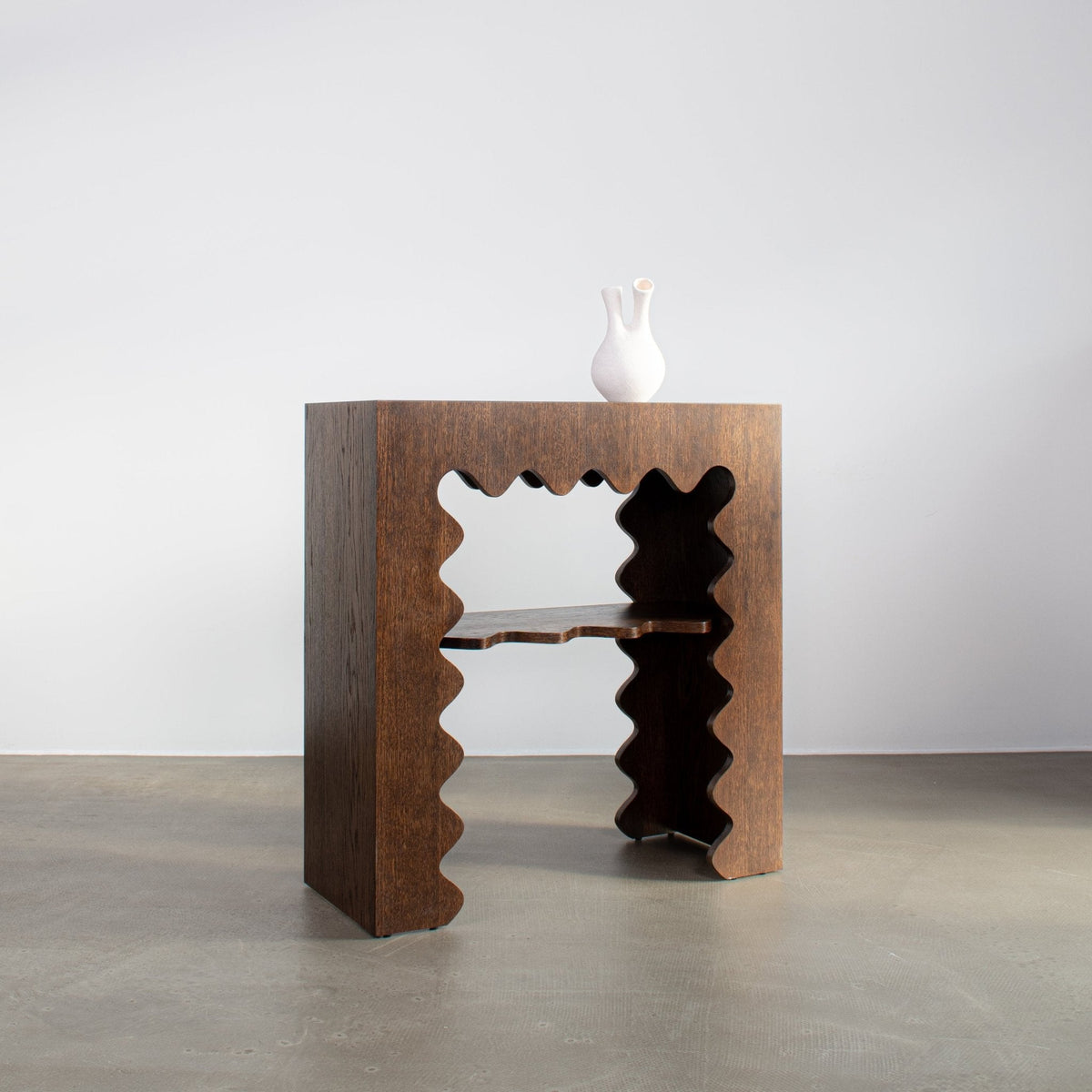
Some interior styles come and go with the seasons – and then there is mid-century modern, an aesthetic that has been coming back for decades and every time looks as if it is right at the top of the trends. No fad has swallowed it, no fashion has pushed it into oblivion. Mid-century modern furniture stands in minimalists' living rooms and eclectic lofts, in Scandinavian villas and in small flats in apartment blocks – and looks equally good everywhere. Why?
Because well-designed furniture does not age. Only things that were meant to be fashionable go out of date.
What Exactly Is Mid-Century Modern?
The name says exactly as much as it needs to: it is the design of the middle of the 20th century. The style emerged roughly between the 1940s and the 1970s – a time when architects and designers around the world were searching for a new language for post-war reality. They wanted to create furniture that was beautiful yet affordable. Modern yet warm. Functional yet full of expression.
In Poland, the same spirit found its expression in 1960s designs from Polish furniture factories – Polish mid-century (PRL-era) furniture – which is why there is such a natural bridge between mid-century modern and Polish post-war design. These are not two different worlds. They are two branches of the same tree.
Key Features of Mid-Century Modern Furniture
Mid-century furniture has its own recognisable language. A handful of elements appear time and again – and together they create an atmosphere that cannot be mistaken for anything else.
The first and most important are slender, often angled legs. They give mid-century furniture its characteristic lightness. A sofa, a sideboard, a coffee table, a bookcase – each of them floats above the floor on narrow, elegant supports. The space beneath the furniture is visible, the floor breathes and the room feels larger and more open. This one detail does more for the whole style than any other.
The second is natural materials – wood above all, with leather, metal and glass as accents. In mid-century modern, wood is neither covered nor disguised – it is the star. A visible grain pattern, the warm tone of walnut or oak, a natural texture – none of this is decoration; it is the essence of the material. Natural wood veneer on a well-made piece looks more beautiful than any foil finish.
The third is clean lines. Mid-century modern furniture has no ornaments, routed mouldings, carvings or gilding. The form is simple, the proportions harmonious, and the whole gives the impression that nothing is accidental – yet nothing is forced either. That is the paradox of good design: the simpler it is, the harder it is to achieve.
The fourth is functionality valued as highly as aesthetics. Mid-century furniture was designed with the user in mind – how they sit, how they hold their body, how they use the space around them. Ergonomics is not a compromise made for beauty here. It is part of it.
Colour and Material Palette – Warmth That Doesn't Overwhelm
A mid-century modern interior is built on a warm but calm palette. A neutral base – off-white, creamy ecru, soft beige – forms a backdrop against which wood and colour accents can shine at full strength.
The complementary colours are those we associate with nature and with the energy of the era: mustard yellow, olive green, terracotta, deep navy, turquoise. Not all at once – one, chosen deliberately and placed in the right spot, is enough: a cushion on the sofa, a throw on the bed, a vase on a bookcase shelf.
Oak or walnut-toned wood is the backbone of every mid-century scheme. When the furniture shares a consistent wood tone, the whole interior gains harmony – even if individual pieces come from different collections or eras.
Metal appears as a subtle accent – brass handles on drawers, golden coffee table legs, a copper lamp fitting. It does not dominate, but it completes. And that finishing touch makes the difference between a tidy interior and an interior with character.
Mid-Century Modern Furniture in the Living Room
The living room is where mid-century modern feels most at ease – and looks its best. Here a piece of furniture can stand out as an object, have its own space and room to breathe.
A sofa on slender legs, with a low back, in a naturally textured fabric – velvet, corduroy or bouclé – is the centre of every mid-century scheme. The form should be simple and elegant: no scrolls on the back, no bulky armrests. Colour: natural and muted, perhaps with a single accent.
Coffee tables with a geometric or organic form, a wooden top and slender legs complete the seating area. A low profile, a light construction, warm wood – that is all you need.
In a mid-century living room, retro bookcases are more than a place for books. They are a display that tells the story of the people who live there – through the ceramics, plants, photos and keepsakes arranged on the shelves. Open, on characteristic angled legs and made of solid wood, a bookcase becomes the visual centre of the wall it stands against.
A retro sideboard with drawers completes the living room composition. A low, horizontal piece, warm wood, brass handles – and even the TV above it stops looking like the dominant feature of the room and becomes part of a well-considered whole.
Mid-Century Modern Furniture in the Bedroom
A mid-century bedroom is a space where elegance gives way to calm. A low bed with an upholstered frame or a wooden headboard on slender legs, a pair of neat bedside tables, a chest of drawers instead of a bulky wardrobe – and the room has what every bedroom is looking for: peace, warmth and the feeling of being in the right place.
This is where mid-century modern answers the needs of small bedrooms particularly well. Low furniture visually raises the ceiling, the space between the furniture and the floor opens up the room, and a consistent wood tone across all pieces unifies the space instead of fragmenting it.


Mid-Century Modern Furniture for the Study and Home Office
A solid wood desk on slender legs, with a single side drawer and a wide work surface, is the mid-century answer for a home study, combining good looks with practicality. A desk like this works twice over: when you sit at it, it is a workplace. When you get up, it becomes a furniture accent that fits naturally into the rest of the room.
A bookcase or shelving unit behind the desk, with books, plants and a few carefully chosen decorations, turns a work area into an inspiring setting. And contrary to what you might think, an attractive working environment really does affect the quality of your thinking.
How to Create a Mid-Century Modern Interior – Where to Start?
Many people approach a mid-century interior as if they were dressing a theatre set: they look for props that resemble the 1960s as closely as possible. Yet a good mid-century interior is not a matter of props – it is a matter of philosophy.
Start with one piece of furniture. Really – one good piece can change the character of a whole room. A solid wood bookcase on angled legs, a warm oak sideboard with brass handles, an armchair upholstered in olive velvet. That is the point around which everything else is built – not a ready-made set you bring in all at once.
Keep your materials consistent. If your living room has wooden furniture in a light oak tone, the coffee table, cabinet and bookcase should be in a similar tone. When the materials are consistent, the interior looks like a considered whole – even if the furniture comes from different collections, makers or eras.
Leave some space. Mid-century modern does not like clutter. Every piece should have its own space – somewhere it can exist, be seen and work as a form. An overcrowded room cancels out the lightness that is at the heart of this style.
Invest in quality, not quantity. A few really good, craftsman-made solid wood pieces will look better and last longer than a dozen average pieces from a chain store. Mid-century modern is a style in which every detail shows – the quality of workmanship, the precision of the joints, the texture of the material.
Mid-Century Modern and Other Styles – How to Combine Them?
One of the greatest strengths of mid-century modern is its ability to converse with other aesthetics. It is not a closed style that demands absolute purity – it is an open style that is happy to join the conversation.
Mid-century + Scandinavian is a natural, almost obvious combination. Both styles value natural wood, functionality, calm colours and a lack of unnecessary decoration. They differ in temperament: Scandinavian is cooler and more ascetic, mid-century is warmer and slightly more expressive. Together they create a space that is both understated and full of character.
Mid-century + industrial is a contrast that works surprisingly well. Raw brick or concrete walls, exposed metal elements and the warm wood of mid-century furniture create a tension between rawness and warmth – and it is exactly this tension that is so appealing.
Mid-century + eclectic is for those who like mixing eras and styles. A 366 armchair next to a modern lamp, a 1960s sideboard beside a contemporary abstract painting, a solid wood bookcase next to an industrial metal shelf – as long as materials and colours stay consistent, such combinations look deliberate and original.
What to Avoid in Mid-Century Modern Style?
Here are a few mistakes that crop up most often when people try to furnish a room in this style.
Historical literalism. Mid-century modern is an inspiration, not a reconstruction. A room that looks like the set of a 1960s TV series is fascinating as an artefact – but it is not made for everyday life. The style should tell your story, not the story of an era.
Too much gold and brass. Metallic accents are beautiful – but as accents, not as the dominant motif. When every handle, every lamp, every wall light and every vase is brass, the effect stops being elegant and becomes overwhelming.
Furniture without material integrity. Cheap foils imitating wood, plastic parts pretending to be metal, MDF passing itself off as solid wood – all of this ruins the effect. Mid-century modern is a style that lives on the authenticity of its materials. Natural wood veneer, solid construction, a brass handle that is really made of brass – these are not aesthetic whims, they are the foundation of the style.
Summary
Mid-century modern furniture is timeless not because someone decided it should be. It is timeless because it was designed with people in mind – how they live, how they move through space, what they need every day. Slender legs, warm wood, clean lines, functional form without unnecessary decoration – this is not a fashion. It is simply good design.
And good design – as several decades of history have proved – never goes out of date.