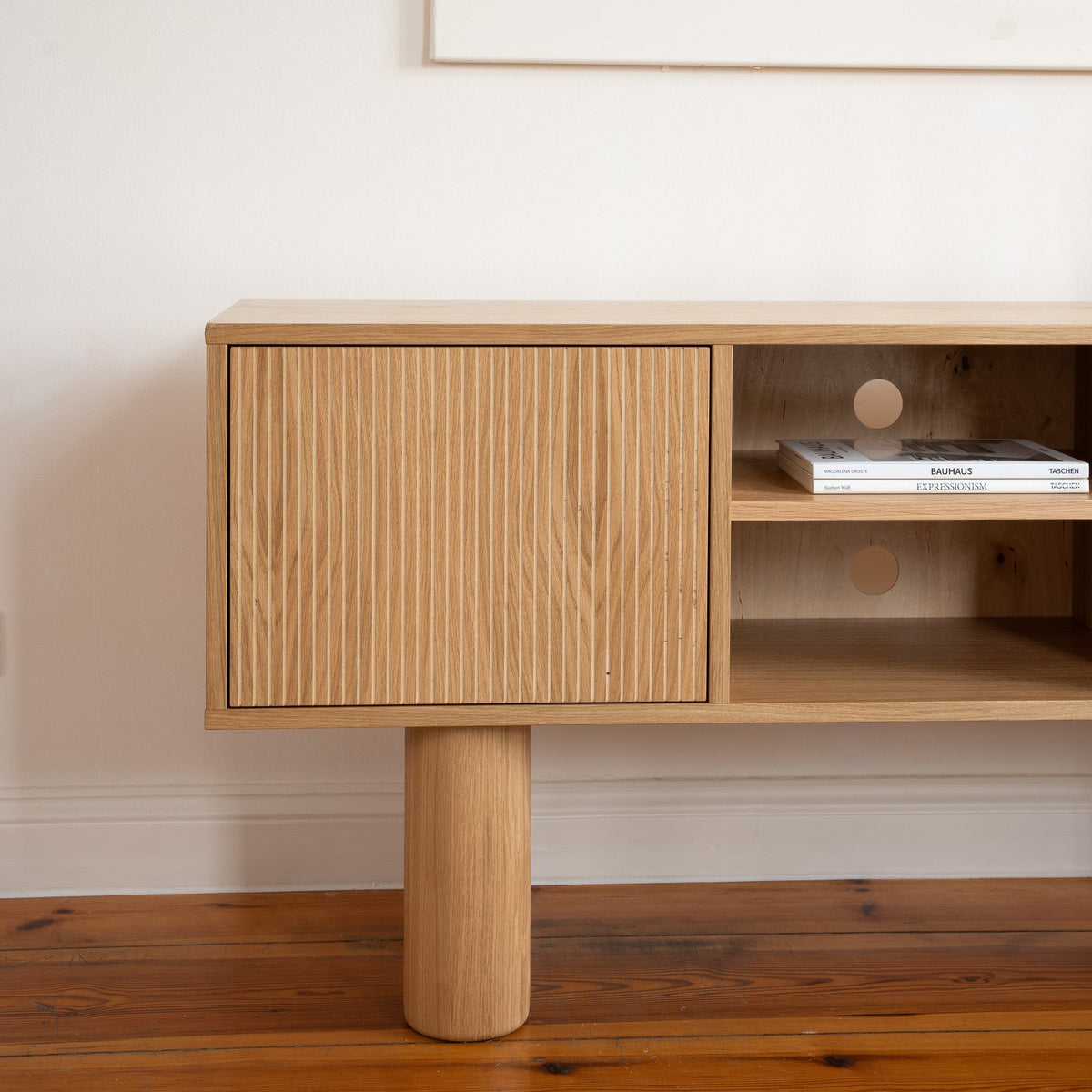
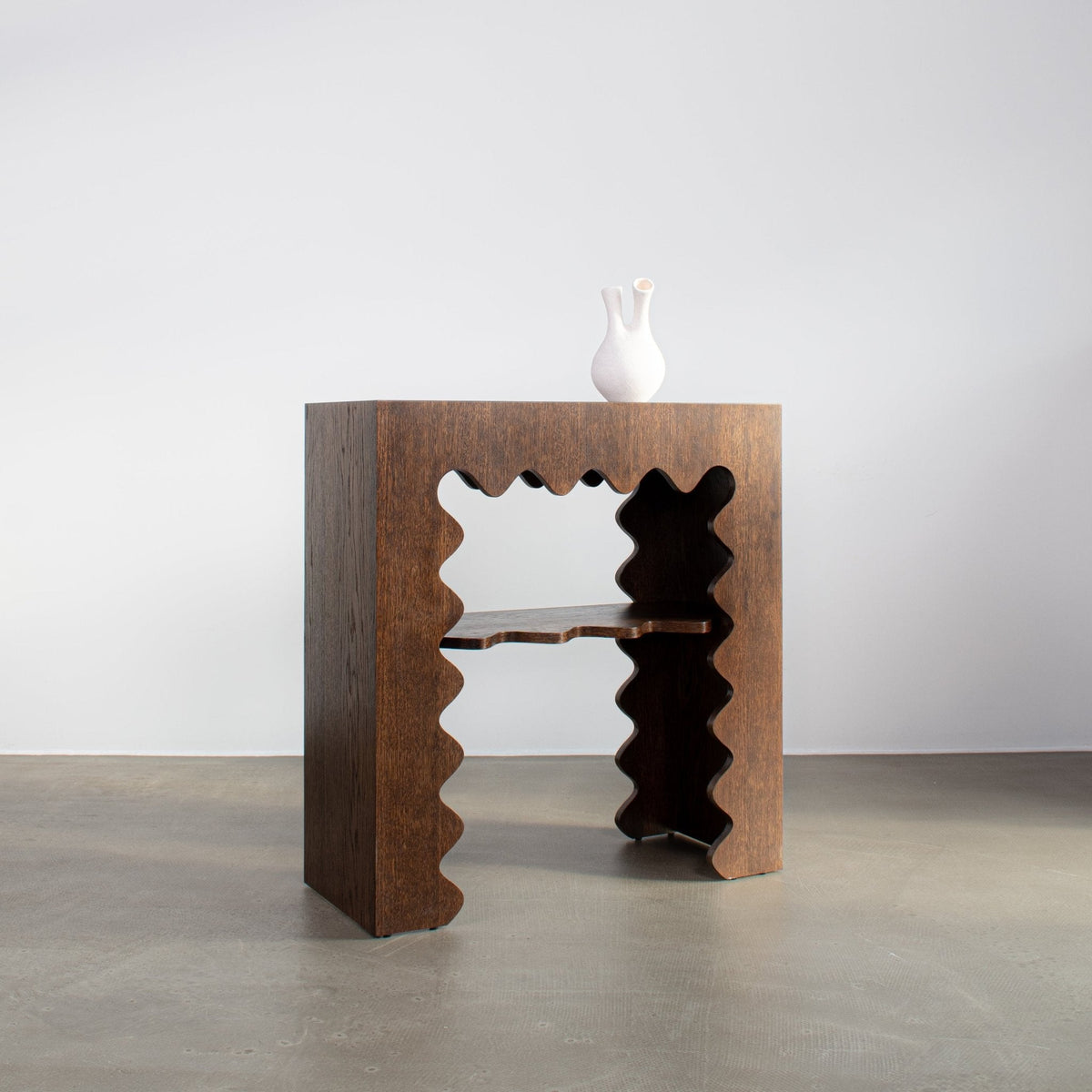
Some pieces of furniture simply walk into a room and transform it instantly. Not through their size, not by being loud – but through their character. A mid-century bookcase is exactly that kind of piece. Slender, angled legs lifting the whole structure off the floor, warm wood with a visible grain, open shelves that invite display – and that unmistakable lightness that makes a room look more spacious rather than more cramped.
It is no coincidence that mid-century modern style is returning to our living rooms with growing force. It was born in the middle of the 20th century as a response to the need for beauty after the turmoil of war: simple, accessible and designed to serve people. Today it appeals for the same reason – it offers what modern interiors often lack: the warmth of natural materials, the calm of clean lines and an elegance that does not age with the seasons.
What makes mid-century style distinctive – and why is the bookcase so important to it?
Mid-century modern style rests on a few pillars. First and foremost, natural wood – walnut, teak, oak – with a pronounced grain that warms up any interior. Then slim, often angled legs that lift furniture off the floor and give it visual lightness. Simple yet sophisticated lines free of unnecessary ornament – because here beauty lies in form, not decoration. And finally, functionality that puts comfort and usability above all else.
A retro bookcase is an exceptionally versatile piece in this context. Unlike a sofa or coffee table, a mid-century bookcase stores, displays and decorates all at once – three functions in one precisely planned spot in the living room. On its shelves, books sit alongside vases, favourite ceramics next to plants, family photos beside designer trinkets. It is this layering that turns a bookcase into a story about the people who live there – not just another piece of furniture.
Features of a good mid-century bookcase
Not every bookcase on angled legs deserves to be called mid-century. Only certain features qualify a bookcase with angled legs for this style:
- Material is the foundation – and there is no room for compromise here. The authentic spirit of this style calls for solid wood or veneer from a natural species: oak, walnut, teak. Visible grain, warm colour, natural texture – together they create an atmosphere that no chipboard can replace. Wood ages beautifully, develops a patina and looks better each year than on the day it was bought.
- Legs – slim, ideally slightly angled, set at the corners of the body. They lift the bookcase off the floor, giving it its characteristic lightness. The room breathes, the floor is visible along its full length, and despite its capacity the piece does not overwhelm the space.
- Proportions and form – mid-century design values symmetry and order, but not sterile monotony. A good bookcase has a well-planned shelf layout: open sections for display, possibly interspersed with closed compartments for things we would rather keep out of sight. The whole is coherent, harmonious and free of superfluous decoration.
- Finish – stain and lacquer that bring out the natural beauty of the wood rather than masking it. A matt or satin finish that responds beautifully to light and draws out the warm tones of the material.


How to place a mid-century bookcase in the living room
A mid-century bookcase works best when it has room to breathe – and when it does not compete with the rest of the interior for attention but complements it harmoniously.
In a living room with neutral walls (off-white, light grey, soft beige), an oak or walnut bookcase becomes the natural visual centre – not dominating, but drawing the eye with the warmth of its material. It is worth placing it against a wall that is not broken up by windows, so that its form remains uninterrupted and the books and decorations stand out clearly against it.
If the living room is small, a mid-century bookcase on slim legs paradoxically helps to make it look bigger – the space beneath the piece leaves the floor visible along its full length, giving the room a sense of depth and air.
In larger spaces, the bookcase can accompany the sofa as a backdrop for the seating area – especially if it stands behind the sofa or to its side, creating a natural backdrop for the whole scheme.
What to display on a mid-century bookcase
There is plenty of freedom here, and it is worth making the most of it. The shelves of a mid-century bookcase are a place for a display that tells your story. A few rules, however, help keep things looking tidy:
- Start with books – they are a natural element that both decorates and fills the space with rhythm. Alternate vertical and horizontal stacks and vary the heights – the whole will look livelier than an even row of spines.
- Add ceramics and vases – one or two large accents are stronger than a dozen small ones. Deep colours work well in mid-century style: bottle green, mustard, terracotta, deep navy. One intense colour against a neutral background has more impact than several competing ones.
- Plants – a monstera, a fig, a yucca or even a small collection of succulents – bring freshness and life. Leaves against wood are a classic combination that looks completely natural in mid-century style.
- Framed family photos – ideally in natural wood frames or in black and gold, in uniform sizes or as a deliberately curated gallery. Avoid random mixes of different styles.
And the golden rule: leave some empty space. An overloaded bookcase loses its lightness – and lightness is the essence of this style.
A mid-century bookcase in a modern interior – does it work?
Absolutely – and this ability to converse with modern design is one of the greatest advantages of mid-century style. A solid wood bookcase on angled legs feels at home in a strictly retro interior, in a minimalist living room with a concrete floor, and in a Scandinavian scheme with light wood and white.
The key is consistency of materials. If there are other wooden accents in the living room – a coffee table, a mirror frame, a lamp base – a bookcase in the same tone will tie them together. If the interior is cool and stark – grey concrete, steel, glass – a warm oak bookcase will bring breathing space and cosiness, becoming the one element that softens the austerity.
You do not need to furnish your living room entirely in 1960s style for a mid-century bookcase to shine. A single piece like this is enough to give the interior character, depth and history.
Summary
A mid-century bookcase is more than a place for books. It is a piece that carries a philosophy: beauty lies in simplicity, good design serves people, and natural materials never go out of fashion. In a modern living room it becomes the point around which the whole scheme gains warmth, character and coherence.
If you are looking for a piece of furniture that will outlast not only the next trend cycles but also house moves, renovations and changing tastes – a solid wood bookcase on slim legs, with genuine craftsmanship behind it, is the answer.